liquid-claw: First Prize at Liquid AI Hackathon
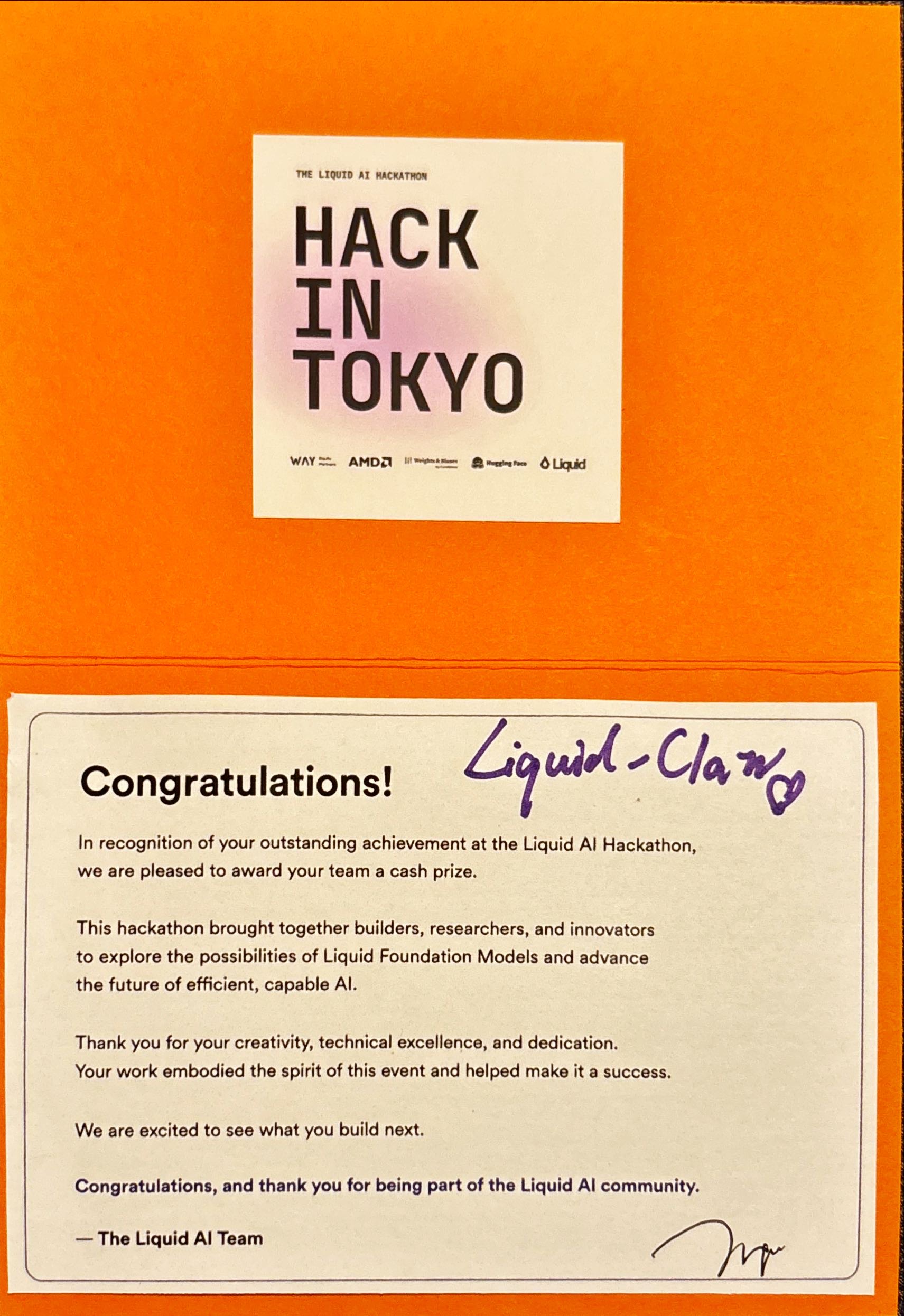
This weekend I participated in Hack the Liquid WAY, a Liquid AI hackathon in Tokyo, and won first prize in the application track. It was a two-day, in-person event on June 6-7, co-hosted by Liquid AI and WAY Equity Partners. There were two tracks: building applications with Liquid Foundation Models (LFMs), and fine-tuning or adapting their audio models for Japanese use cases.
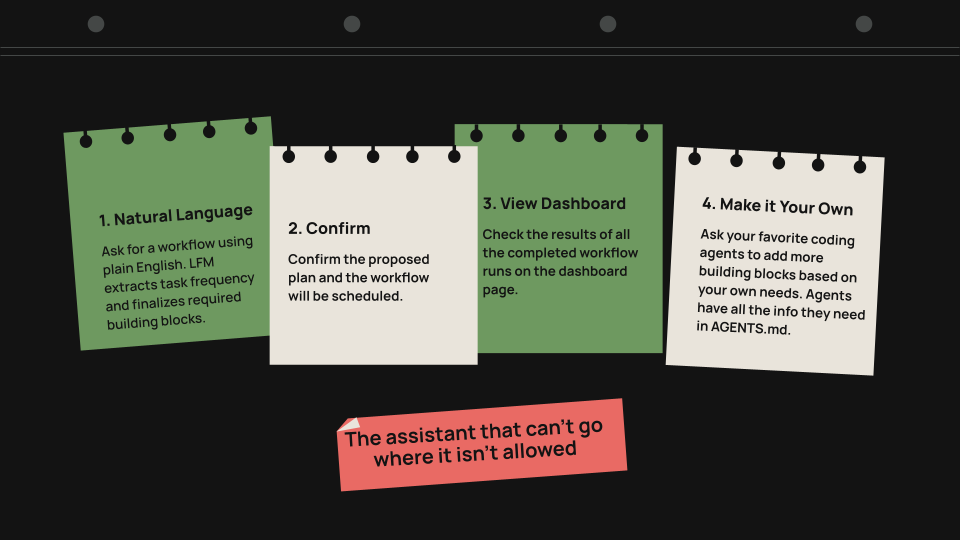
I built liquid-claw, a local workflow assistant. You describe a task in plain English, review the steps it proposes, and confirm. It then runs on demand or on a schedule, with results on a dashboard. All the LLM inference runs on your own machine.
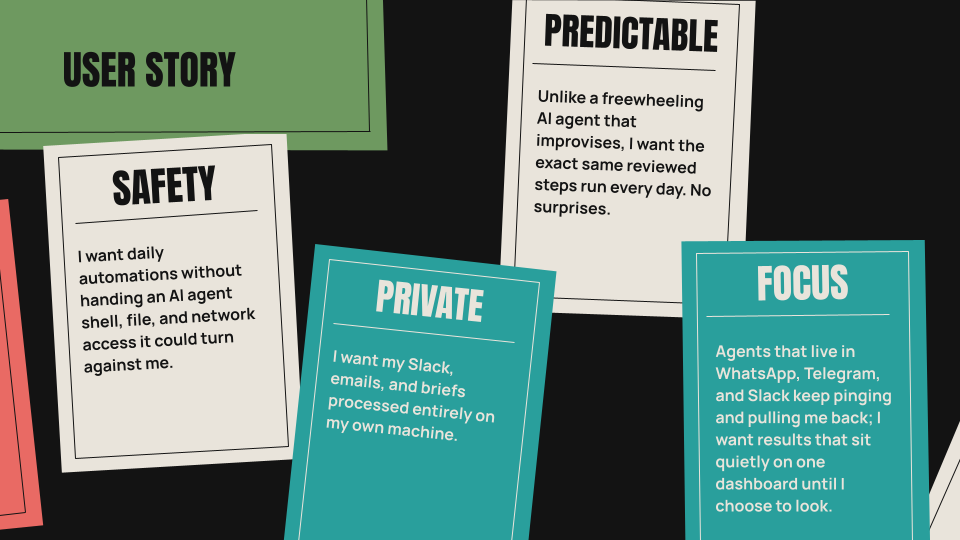
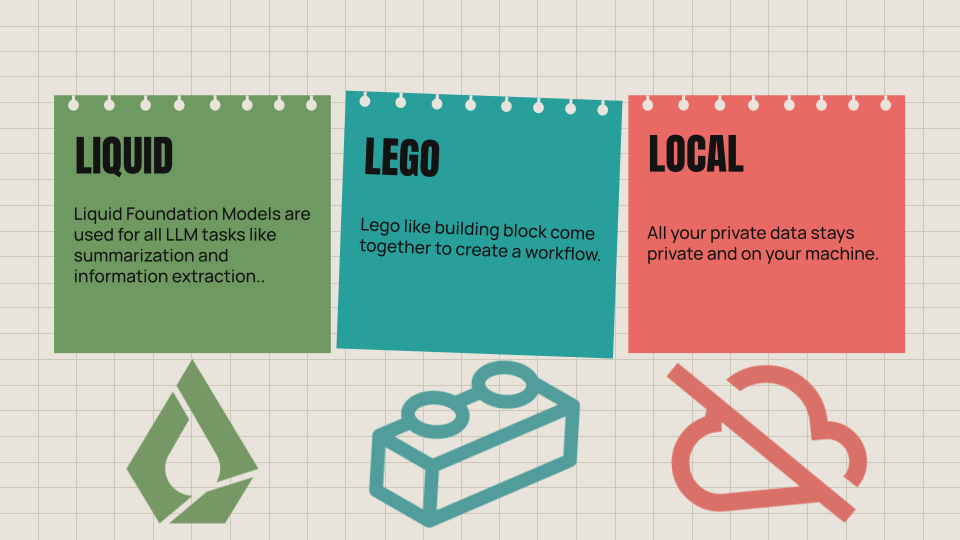
I wanted daily automations without giving an AI agent unrestricted shell, file, and network access. Once I have reviewed a workflow, I want the same steps to run every day. I also want my emails and Slack messages processed locally, with results that I can check whenever I want. No notifications pulling me back into another chat app.
For example, ask it to prioritize your emails and summarize Slack messages every morning at 8am. It first finalizes the schedule, then figures out the steps: fetch recent emails, prioritize them, fetch Slack messages, and summarize them. After everything looks good, you confirm and the workflow is created. You can run it right away or wait for the scheduled run.
Here’s that workflow in the demo from my presentation. I create it, run it, and check the results on the dashboard:
The main design decision was to build workflows from predefined building blocks. Each block is a small, reviewed Python capability, like fetching recent emails or summarizing text. The model picks which blocks are needed and in what order. It can only do the fixed things that we have predefined. It doesn’t write code or run shell commands.
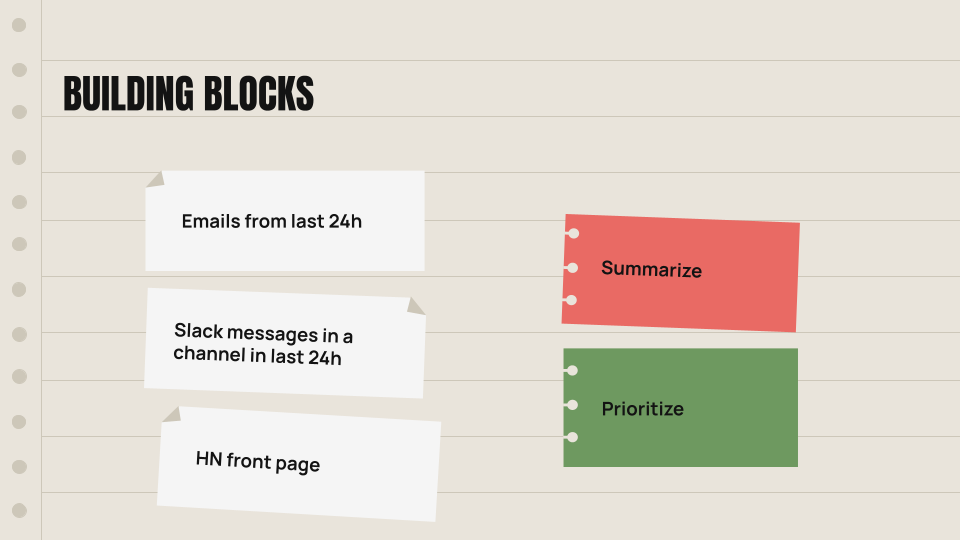
Adding a new capability means adding a building block. You don’t need to change the planner, execution engine, or UI.
I split the LLM work between two local models: an 8B planner selects the schedule and blocks, and a 1.2B model handles tasks like summarization and prioritization inside the blocks. Each model has a small, specific job. Application code handles validation, permissions, and execution, and stores workflows and results in local SQLite.
Code and setup instructions: primaprashant/liquid-claw.